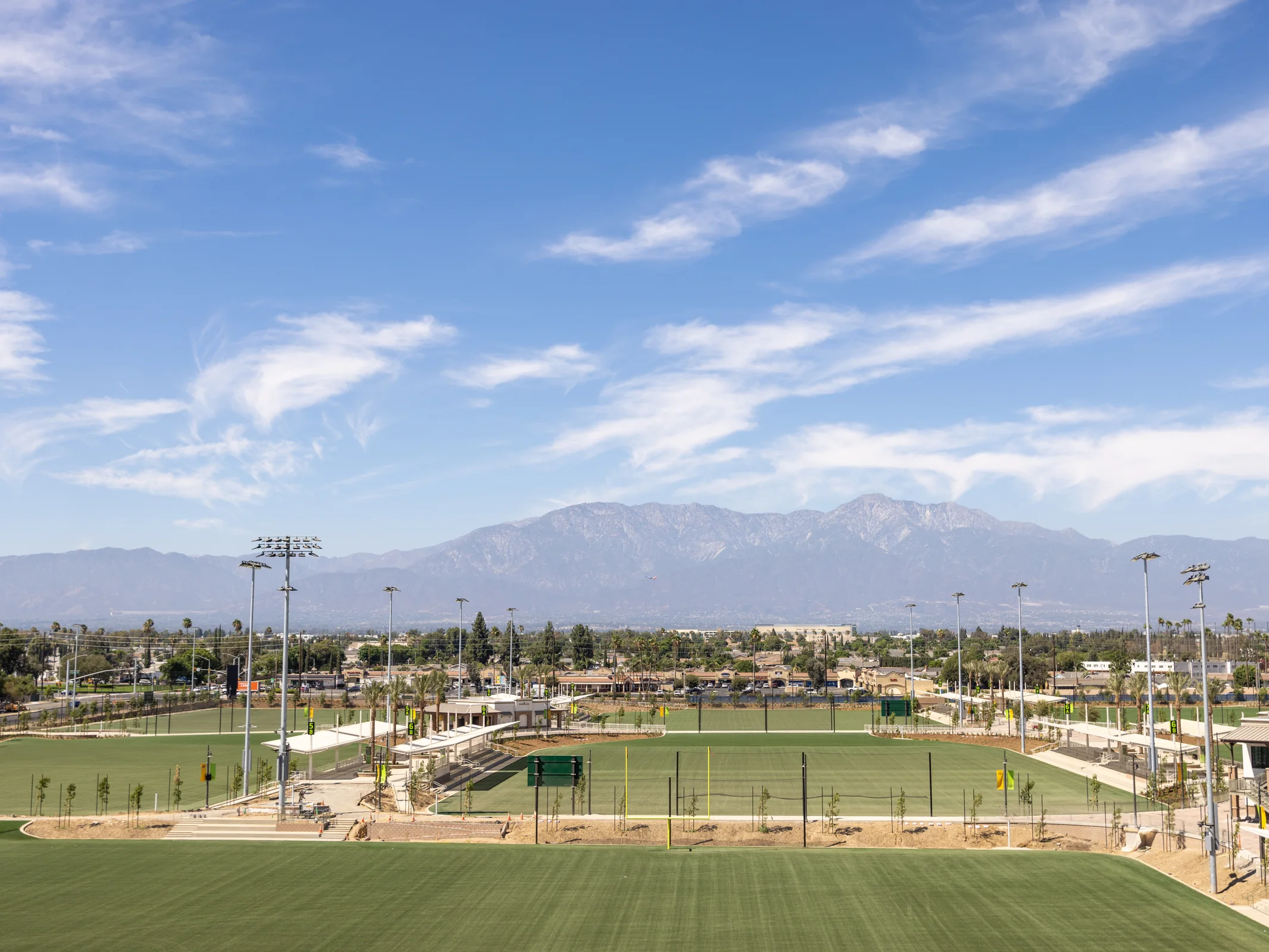
The Build
For Dave Coggin, the growth of youth baseball in the Inland Empire is visible in the expanding choices facing families: travel teams, tournaments, showcases and year-round training.
“Absolutely. The growth has been exponential.”
But the same coach who sees business opportunity also sees a problem.
“However, I don’t believe all of that growth has necessarily been in the best interest of the player,” he said.
That tension runs through the region’s youth-sports story. Tournament visitors can mean customers for hotels, restaurants and training businesses. For families, the same activity can mean larger bills, crowded schedules and less time to recover.
Why this matters
Select a perspective to see a short summary based on the reporting.
Ontario Sports Empire’s approaching opening brings those questions into sharper focus: How much can sports contribute to the local economy, and what makes that growth worthwhile for the athletes driving it?
The complex lists its grand opening for October 24, 2026. Helen McAlary, executive director of Community Life & Culture for the City of Ontario, said the ribbon-cutting celebration is intended to introduce residents to the venue.
In a written response to Inland Empire Today, she described plans for tournament play spectators can watch, professional-athlete meet-and-greets, a field-goal competition, a home-run derby and a kids zone.
“After October 24th, we will jump into regular operations that will be a mix of local youth sports, travel tournaments, and special events.”
— Helen McAlary
Executive Director, Community Life & Culture, City of Ontario
Source: City of Ontario response to Inland Empire Today
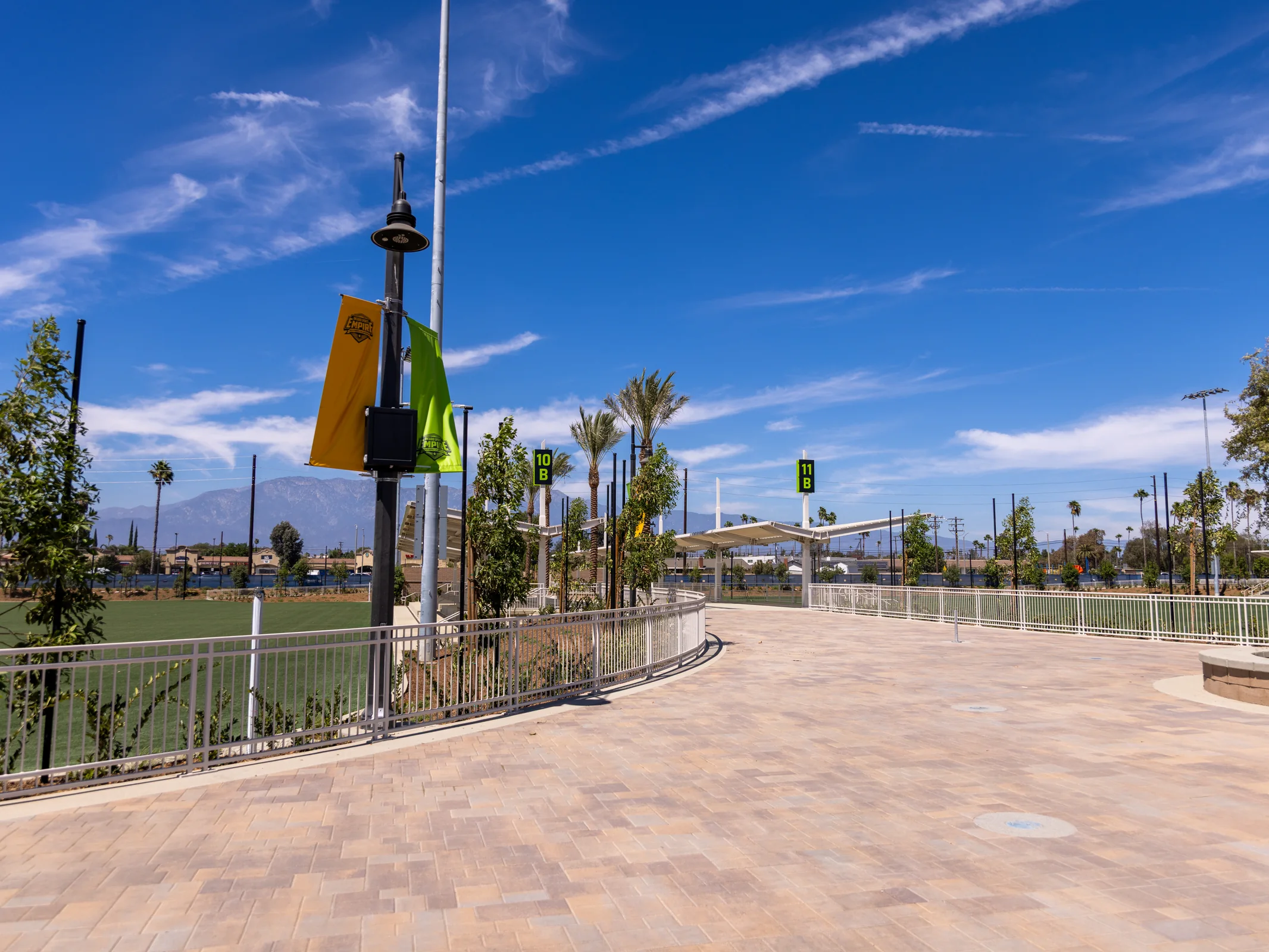
“This is a sports facility but there will be lots of opportunity for the community to enjoy the venue with events and play,” McAlary said.
City of Ontario description
199
acres
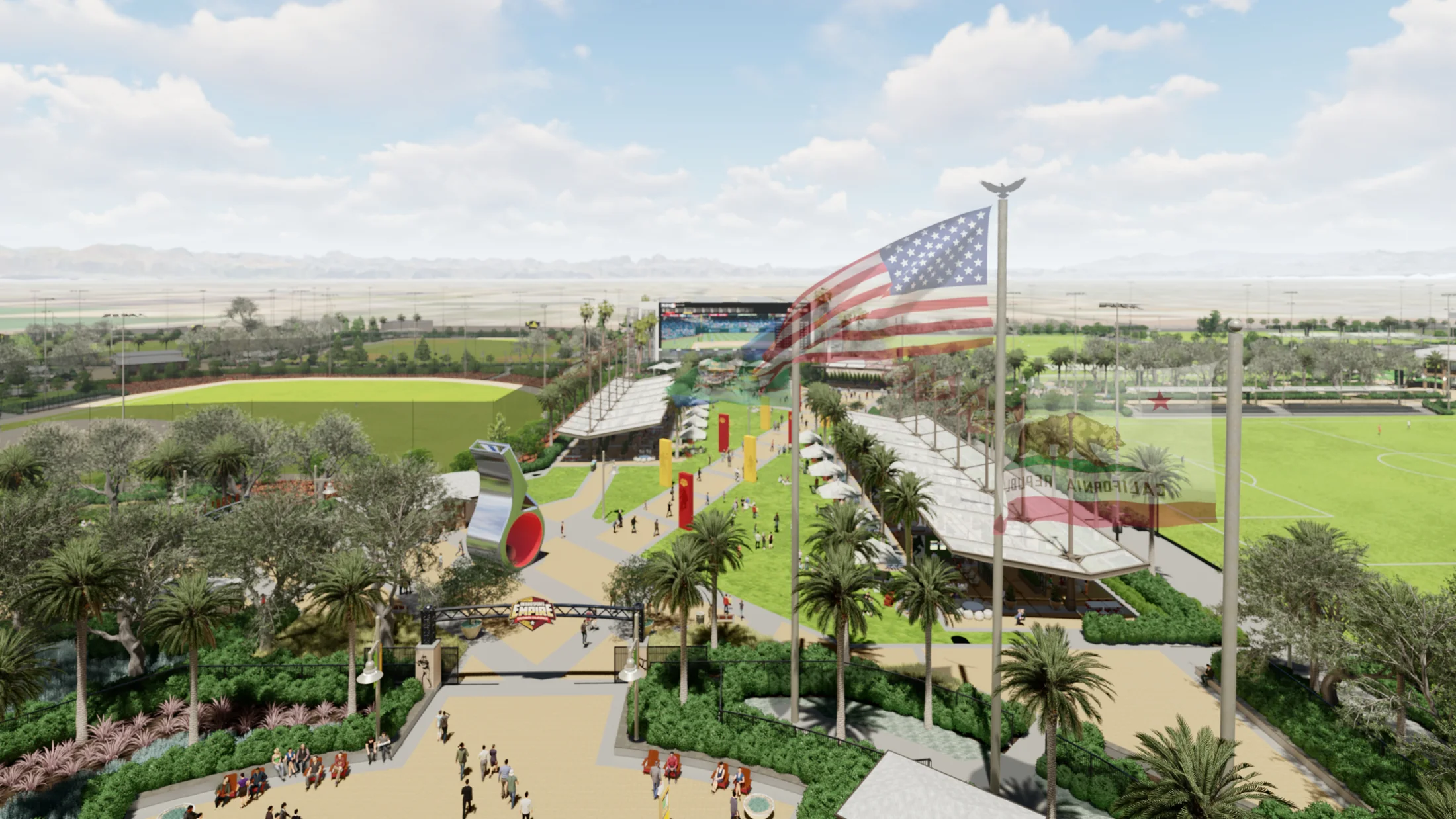
The City describes Ontario Sports Empire as part of a multiphase sports and entertainment development encompassing sports, hospitality, dining, retail and public spaces.
City of Ontario — Sports Empire →Not every planned component will be operational on October 24.
Christopher Hirz, Ontario Sports Empire’s general manager, said the opportunity to help shape the operation was central to his decision to take the job.
“The size and versatility of the facility are both exciting, but what mattered most to me was the chance to build the team, culture, and programming that will bring it to life,” he said.
Before opening, his priorities are practical: staffing, safety procedures, traffic and parking plans, maintenance and guest service.
“A beautiful facility will bring people through the gates, but the experience we provide will determine whether they return.”
The Business
The Inland Empire already has an established tournament destination in Norco. SilverLakes Park describes a 130-acre property with 24 soccer fields, alongside event spaces and the FieldHouse. Its mix of sports and other gatherings shows how a venue can serve visitors beyond the playing field.
Sports tourism isn’t new to the Inland Empire
Ontario Sports Empire
- · 199-acre broader multiphase development
- · Sports + planned hospitality, dining, retail and public spaces
- · Grand opening listed for October 24, 2026
The acreage figures describe different developments and should not be treated as a direct facility-to-facility comparison.
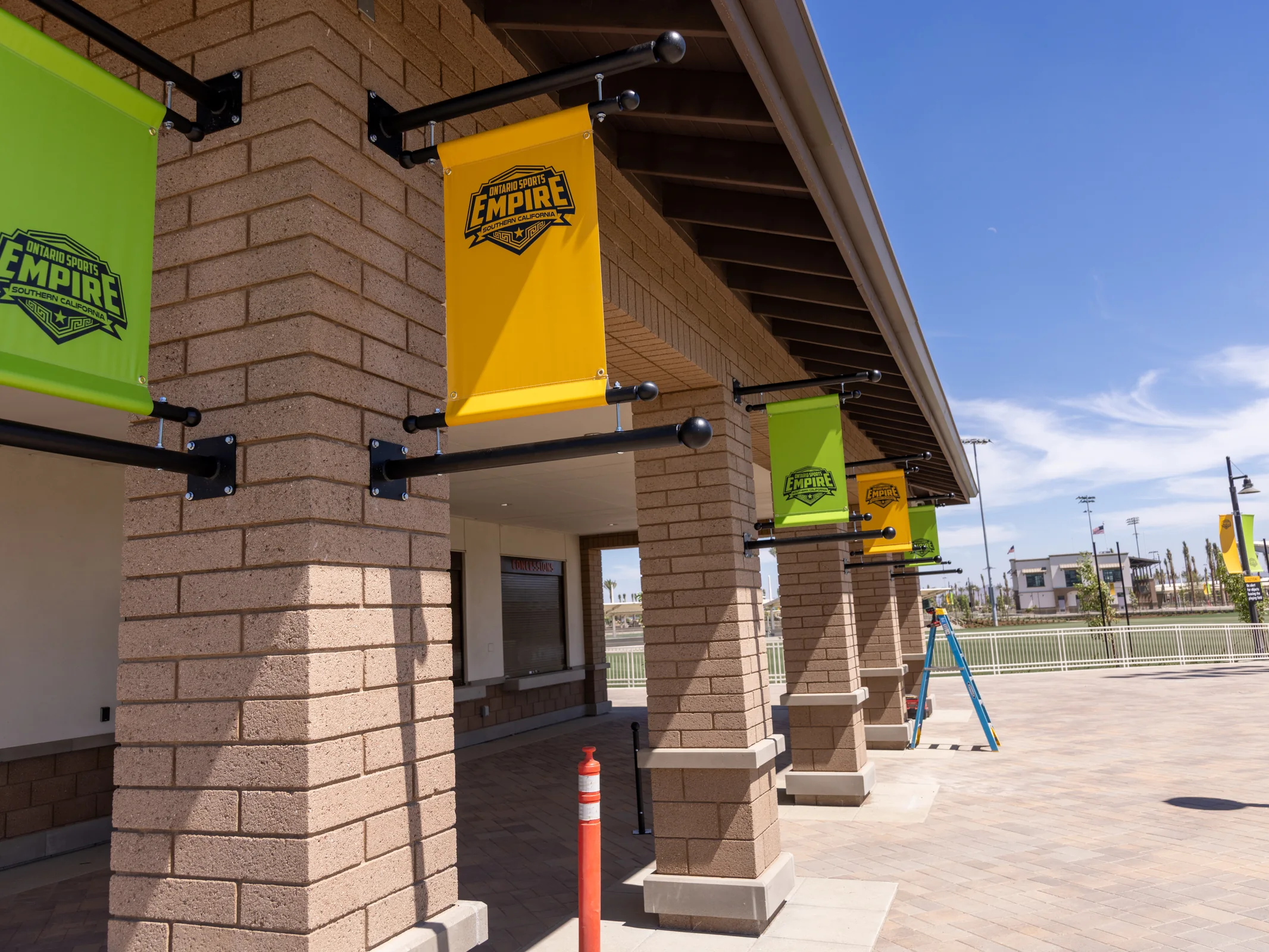
Coggin described how tournament business can spread into the surrounding community.
How spending can spread
Where a tournament weekend can spread spending
Source: Dave Coggin interview with Inland Empire Today
“When hundreds of families come into an area for a weekend tournament, they’re staying in hotels, eating at restaurants, buying gas and visiting local businesses.”
He also pointed to a sports-performance economy that includes instructors, training facilities, strength coaches and physical therapists. Some of that demand comes from visiting teams; other business comes from local families pursuing development throughout the year.
The scale of the regional payoff is a separate question.
Ontario’s economic-development page promotes projections of 1.2 million new visitors, $62 million in new net spending and more than 610 new full-time jobs. The page does not clearly specify the measurement period or development phase behind those headline figures. They should be understood as the City’s projections, rather than spending or jobs already recorded.
The numbers sound big. What do they mean?
City of Ontario projections
1.2 MILLION
Projected new visitors
$62 MILLION
Projected new net spending
610+
Projected new full-time jobs
The City’s economic-development page does not clearly specify the measurement period or development phase behind these headline figures. These figures are projections, not spending or jobs already recorded.
The economist’s context
Manfred Keil
Chief Economist, Inland Empire Economic Partnership
offered a more restrained assessment of sports tourism’s potential, welcoming additional amenities and economic diversification but saying the regional impact would be limited.
“On the other hand, amenities of any kind, including sport fields, would add to the potential attractiveness of the Inland Empire. We need more of this, even if the payoff in terms of job projections is minimal for now.”
“Again, the dollar amount is minimal in the bigger picture of things. I would not try to sell it on those grounds.”
His assessment leaves room for a facility to matter to nearby businesses and residents without transforming the economy of two counties.
The Cost
For families, meanwhile, spending is an immediate concern.
“The financial commitment goes well beyond team dues. There are tournament fees, travel, hotels, food, equipment, private instruction and training.”
Time can be just as costly. Coggin said families sacrifice weekends, vacations and time away from baseball as the sport becomes a year-round commitment. He also described pressure to pursue team rankings, pitching velocity and other performance measures.
What can a sports weekend cost your family?
Youth-sports expenses vary widely. Enter your own numbers to see how quickly one weekend can add up.
Your weekend total
$0
If it’s a year-round commitment
$0estimated across the year
If your family travels for 18 tournament weekends at $0 per weekend, that’s $0 across the year before accounting for practices and training.
Simple multiplication only — this does not assume hours, travel distance or missed school.
This calculator is a reader planning tool, not survey data or an estimate of typical Inland Empire family spending.
“My concern is not with families investing in their children,” he said. “It’s making sure that investment is actually helping the athlete develop rather than simply feeding the pressure to constantly do more.”
The Athlete
When More Isn’t Always Better
Dr. Jonathan Smits, a pediatric sports-medicine physician at Loma Linda University Health, said year-round participation in one sport subjects young athletes to repetitive stresses with limited recovery.
In written answers provided through the university health system, he described overuse injuries involving growing bones, tendons and joints. He said risk rises when athletes compete on multiple teams simultaneously, lack recovery between seasons or continue training through pain.
“Rest and recovery should be considered an important part of training and athletic development, not time lost from training.”
Smits said warning signs can include persistent or recurrent pain, unexplained joint swelling, repeated injuries, excessive fatigue and disrupted sleep. Changes in attitude also matter: losing enjoyment, feeling pressured to participate or wanting to avoid practices can signal an excessive load.
Dr. Jonathan Smits · Loma Linda University Health
Signs a young athlete’s load may need to be reassessed
Tap each item to reveal a short explanation.
“When sports consistently interfere with adequate sleep, nutrition, school, family life, or emotional well-being, the athlete’s schedule should be reassessed and, when necessary, reprioritized.”
— Dr. Jonathan Smits
This section reports general sports-medicine guidance from Dr. Smits and is not a diagnostic tool or individualized medical advice.
He encouraged participation in different sports for most children, explaining that it builds a broader range of movement skills while reducing repeated stress on the same parts of the body.
Specialization versus varied movement
Playing different sports builds a broader range of movement skills while reducing repeated stress on the same areas of the body.
“Early specialization is not necessary to achieve a high level of performance in most sports.”
Multi-sport participation does not prevent all injuries.
What Comes Next
As Ontario prepares to welcome players and spectators, its operators face the task of delivering the safe, welcoming experience Hirz described. The wider youth-sports community faces a related challenge: ensuring that more opportunities produce something valuable for the children taking part.
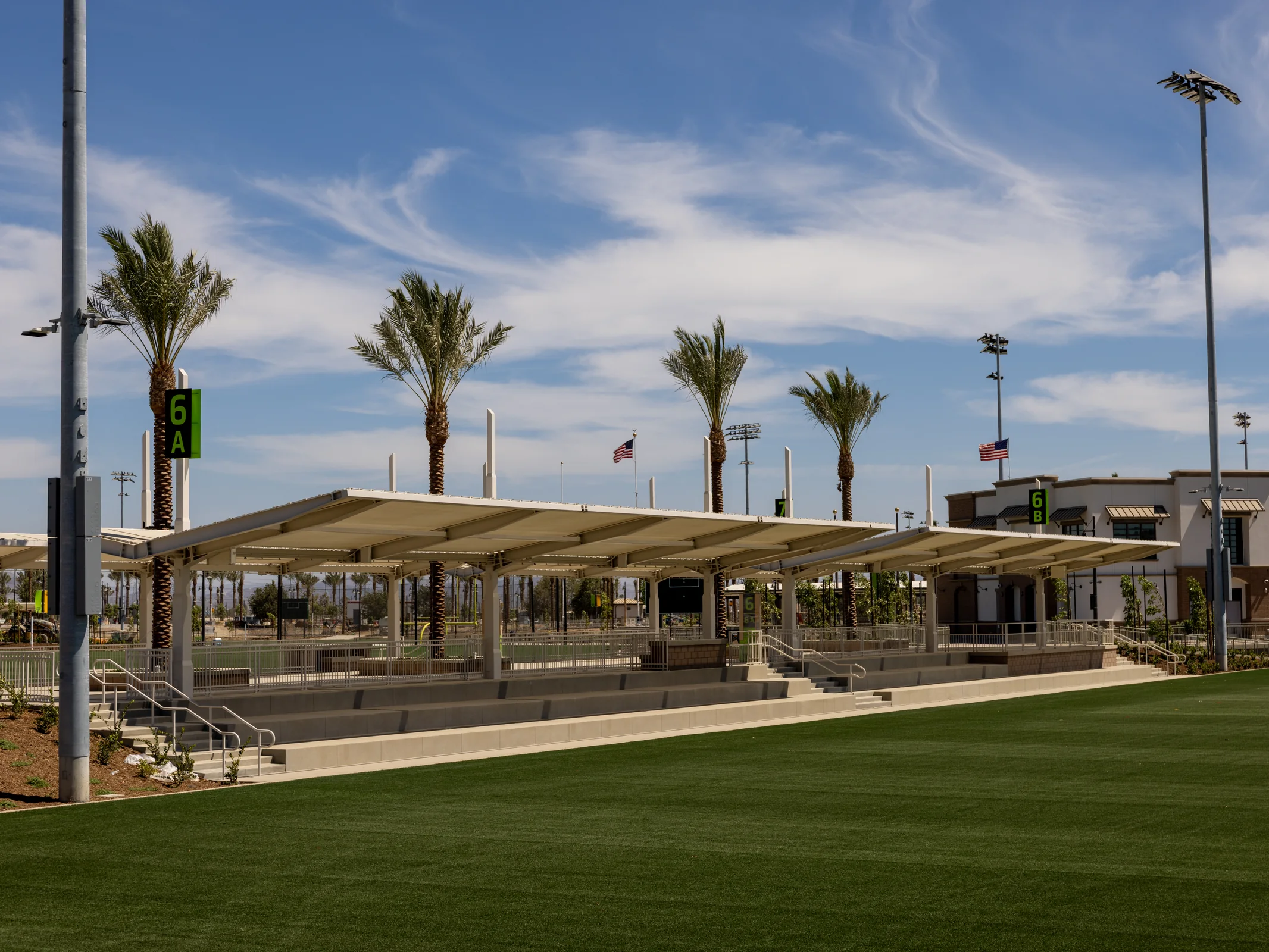
Coggin put that responsibility plainly.
What success could mean
Themes raised by the people interviewed — not measured outcomes.
- 1A good visitor experience
- 2Opportunity for nearby businesses and residents
- 3Quality development for young athletes
“The goal shouldn’t be to see how much baseball we can sell to a family. The goal should be to determine how much quality development a young athlete actually needs.”
Inland Empire Today
Reported by Eric Sheffield
Sources & reportingShow / hide
- Dave Coggin — PFA Sports Inland Empirehttps://www.pfasports.com/home
- Christopher Hirz — Ontario Sports Empirehttps://ontariosportsempire.com/staff/
- Helen McAlary — City of Ontario, Community Life & Culturehttps://www.ontarioca.gov/government/agendas/recreation-parks-commission
- Manfred Keil — Inland Empire Economic Partnershiphttps://ieep.com/economist-center/
- Dr. Jonathan Smits — Loma Linda University Healthhttps://lluh.org/provider/smits-jonathan
- Ontario Sports Empire — grand-opening informationhttps://ontariosportsempire.com/event-detail/grand-opening/
- City of Ontario — Sports Empire development and economic projectionshttps://www.ontariothinksbusiness.com/SportsEmpire
- SilverLakes Park — venue informationhttps://silverlakespark.com/
- Ontario Sports Empire — photographshttps://ontariosportsempire.com/
- RJM Design Group — architectural rendering, supplied by Ontario Sports Empirehttps://rjmdesigngroup.com/
Interviews and written responses from Dave Coggin, Christopher Hirz, Helen McAlary, Manfred Keil and Dr. Jonathan Smits were provided to Inland Empire Today for this story. Links above identify their official profiles or organizations; the interview responses are original reporting, not quotations taken from those websites.
Share this story